- March 6, 1809, 217 years ago — Death of Thomas Heyward Jr..
- March 6, 1724, 302 years ago — Birth of Henry Laurens, President of the Continental Congress.
- March 7, 1707, 319 years ago — Birth of Stephen Hopkins, signer of the Declaration of Independence.
- March 7, 1699, 327 years ago — Birth of Susanna Boylston Adams, mother of John Adams.
Chapter XI — From Soldier to Settler, and What Followed
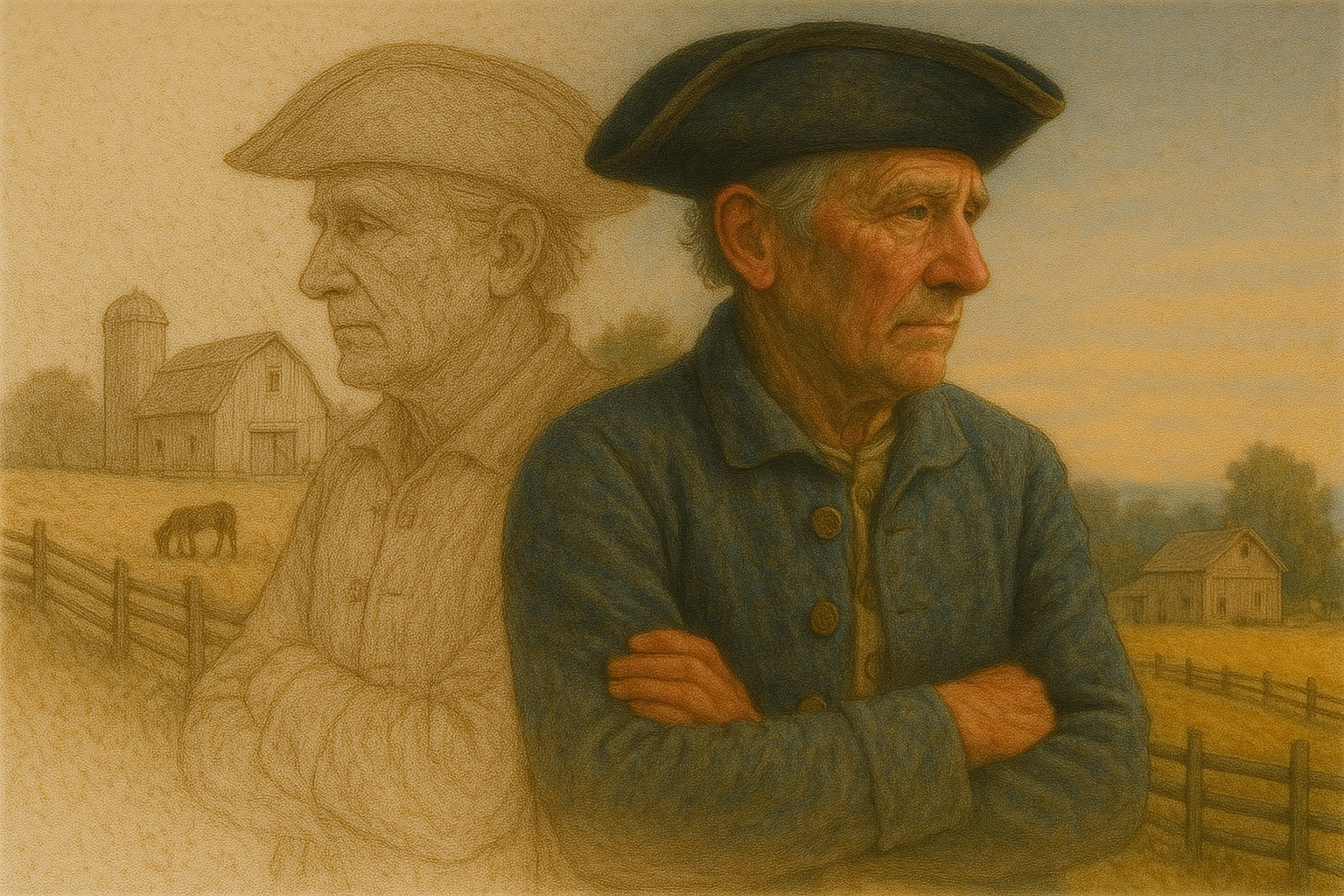
My service did not end my life, nor did it define all that followed. Like many who survived the war, I returned not to celebration, but to the quieter labor of building a future in a nation still finding its shape. The years after independence were marked less by uniform and command than by family, work, and movement westward, as opportunity and necessity allowed.
According to later historical record, I was born on October 16, 1759, in the Province of Zweibrücken, Europe, and came to America with my parents in April of 1773. Our family first settled in Bedford County, Pennsylvania, before moving on to Somerset County, where roots were put down more firmly. On September 2, 1787, I married Anna Eva Fritz, and together we raised nine children, all born in Somerset County. The work of those years was not distinguished by public record, yet it was no less demanding than service in the ranks.
In the spring of 1815, like many veterans and settlers of that generation, I moved again—this time westward to Wayne County, Ohio, settling in Milton Township among the early emigrants. There, land was cleared, homes established, and community slowly formed. The war had taught endurance; settlement required the same. I remained there until my death in early 1828, having lived long enough to see the republic endure beyond its fragile beginnings.
History records these facts plainly, without flourish. What it does not record are the countless veterans who carried the habits of service into civilian life, shaping families and communities without expectation of recognition. In that, my life was not unique, but representative.
The line did not end there. Service to the United States has continued through generations of my family—through wars named and unnamed, conflicts large and small. My grandfather and my father both served, including service during the Second World War and in the Utah Air National Guard. Like many veterans, they spoke little of their time in uniform. In some cases, records were lost, destroyed, or never fully kept. What remained was not paperwork, but example.
This account ends where record yields to memory. From one soldier of the Revolution to those who followed in later centuries, the thread that binds them is not found in medals or archives alone, but in the repeated decision to serve when called. That, perhaps more than any single act, is what endured.
Source Note
Biographical details in this chapter are drawn from History of Wayne County, Ohio: From the Days of the Pioneers and First Settlers to the Present Time by Benjamin Douglass, page 684, and from preserved family records. Later generations’ service is referenced in general terms where official documentation no longer survives.
Disclaimer:
The articles on this site include original commentary as well as transcriptions and excerpts from historical newspapers, books, and other public domain sources. Every effort has been made to preserve the accuracy and context of these materials; however, their inclusion does not imply authorship, agreement, or endorsement by Patriot Echoes unless explicitly stated. Sources are cited where available. All materials are presented for educational, archival, and civic purposes. If you believe any item has been misattributed or requires correction, please contact the editorial team.