- March 6, 1809, 217 years ago — Death of Thomas Heyward Jr..
- March 6, 1724, 302 years ago — Birth of Henry Laurens, President of the Continental Congress.
- March 7, 1707, 319 years ago — Birth of Stephen Hopkins, signer of the Declaration of Independence.
- March 7, 1699, 327 years ago — Birth of Susanna Boylston Adams, mother of John Adams.
Chapter III — The New York Campaign Begins, 1776
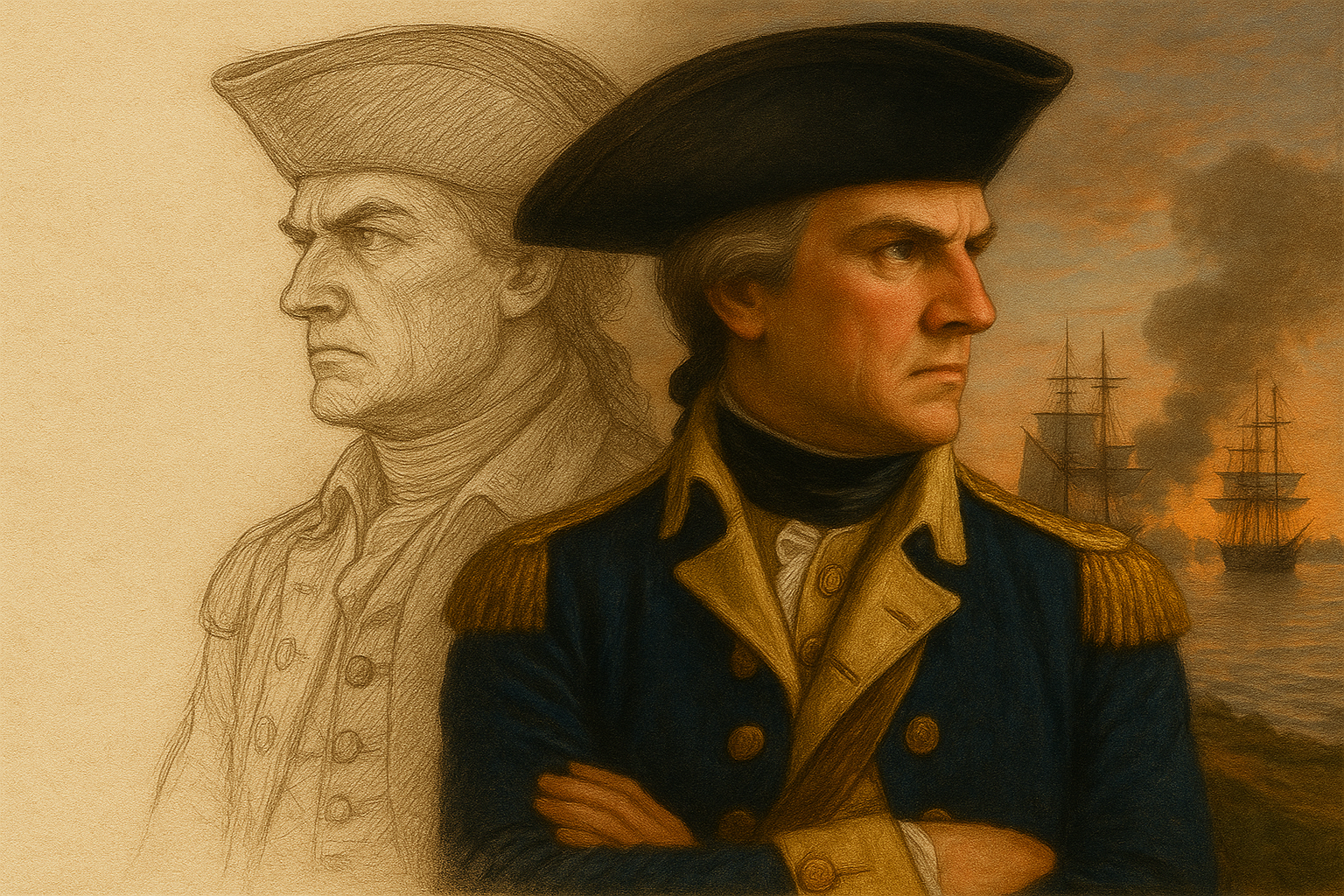
In the summer of 1776, the focus of the war shifted decisively toward New York, a place whose rivers and harbors made it both a prize and a peril. Orders moved swiftly through the army, and regiments of the Pennsylvania Line were drawn northward to reinforce positions already under strain. It was understood among the ranks that the coming contest would test not only our resolve, but the very existence of the Continental Army.
The march itself was an education. Roads were crowded with men, wagons, artillery, and livestock, all moving with uncertain coordination. Heat, dust, and illness took their toll before any enemy was encountered. Camps were established and broken in quick succession, sometimes with little more than rumor to explain the movement. What remained constant was the expectation that the British, well supplied and supported by naval power, would soon press their advantage.
Once positioned near New York, the scale of the conflict became unmistakable. Reports circulated of enemy ships filling the harbor and seasoned regiments preparing to land. For many of us, this was the first time the war felt fully realized—not as distant fighting elsewhere, but as an approaching force that could not be avoided. Defensive works rose wherever time allowed, shaped by fatigue and urgency rather than refinement.
The army’s situation was precarious. We faced an enemy superior in training and equipment, while our own lines stretched thin across unfamiliar ground. Orders emphasized readiness and restraint, for preservation of the army had become as important as victory in any single engagement. Men learned quickly that standing fast did not always mean advancing, and that retreat, when ordered, was not cowardice but necessity.
As the campaign began in earnest, uncertainty became our constant companion. No man could say where he would be sent next, or how long the army might be able to hold its ground. Yet amid this uncertainty, the regiment remained intact. We took our place where the Line was set, aware that history would judge these days not by individual acts, but by whether the army endured them at all.
Disclaimer:
The articles on this site include original commentary as well as transcriptions and excerpts from historical newspapers, books, and other public domain sources. Every effort has been made to preserve the accuracy and context of these materials; however, their inclusion does not imply authorship, agreement, or endorsement by Patriot Echoes unless explicitly stated. Sources are cited where available. All materials are presented for educational, archival, and civic purposes. If you believe any item has been misattributed or requires correction, please contact the editorial team.