- March 6, 1809, 217 years ago — Death of Thomas Heyward Jr..
- March 6, 1724, 302 years ago — Birth of Henry Laurens, President of the Continental Congress.
- March 7, 1707, 319 years ago — Birth of Stephen Hopkins, signer of the Declaration of Independence.
- March 7, 1699, 327 years ago — Birth of Susanna Boylston Adams, mother of John Adams.
Chapter IX — Holding the Line as the War Wears On, 1778–1780
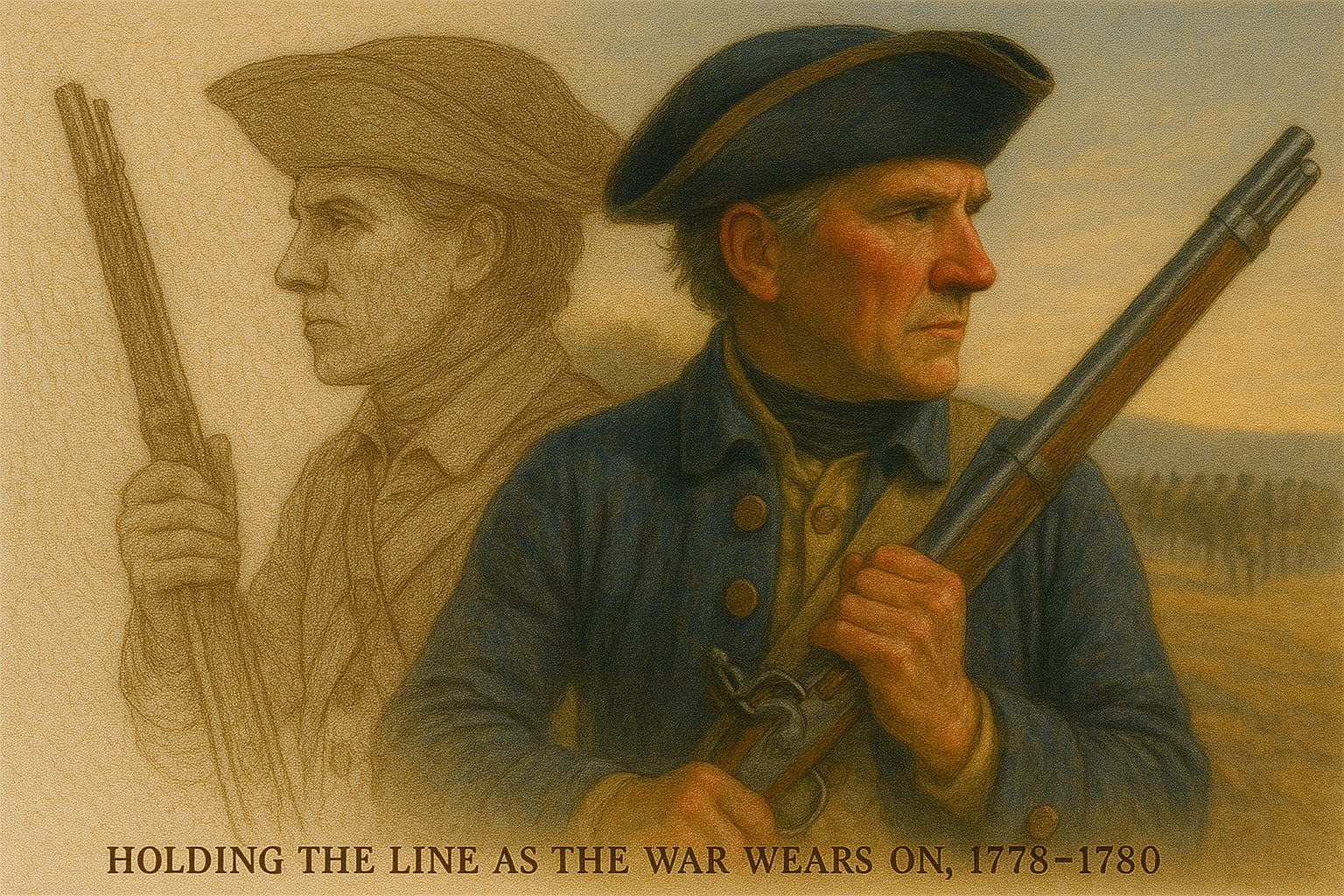
As the war lengthened, its character changed. The early urgency that had driven men into service gave way to something more difficult to sustain—endurance without certainty. Campaign followed campaign, each demanding attention, movement, and restraint, yet offering little sense of conclusion. Victory, when it came, was partial and temporary; loss, when it came, was familiar.
For the Pennsylvania Line, holding the line meant constancy rather than spectacle. Duties expanded beyond the expectation of battle alone. Guards were posted, roads secured, positions maintained, and movements executed with care. The work was repetitive, often unseen, and essential. It was in these unremarkable days that the army proved its durability.
Enlistments expired and were renewed. Some men departed, others arrived, and those who remained learned to measure time not by seasons but by service rendered. Fatigue accumulated quietly. So did experience. What once required instruction now came by habit, and habits, once formed, held even under strain.
Patriotism endured, though it grew less vocal. The language of liberty remained, but it was carried more in action than in speech. To continue in service when enthusiasm had faded required a different kind of commitment—one rooted not in expectation of reward, but in responsibility to those who stood alongside you.
By these later years, the war had stripped away illusions. What remained was a shared understanding that independence would not be granted by a single moment or decisive act, but by sustained effort over time. To hold the line, day after day, was to participate in that effort. In remaining, the regiment affirmed that the cause was still alive, not because it was easy to believe in, but because it was necessary to finish.
Disclaimer:
The articles on this site include original commentary as well as transcriptions and excerpts from historical newspapers, books, and other public domain sources. Every effort has been made to preserve the accuracy and context of these materials; however, their inclusion does not imply authorship, agreement, or endorsement by Patriot Echoes unless explicitly stated. Sources are cited where available. All materials are presented for educational, archival, and civic purposes. If you believe any item has been misattributed or requires correction, please contact the editorial team.