- March 6, 1809, 217 years ago — Death of Thomas Heyward Jr..
- March 6, 1724, 302 years ago — Birth of Henry Laurens, President of the Continental Congress.
- March 7, 1707, 319 years ago — Birth of Stephen Hopkins, signer of the Declaration of Independence.
- March 7, 1699, 327 years ago — Birth of Susanna Boylston Adams, mother of John Adams.
Chapter I — The Call to Arms (1775–1776)
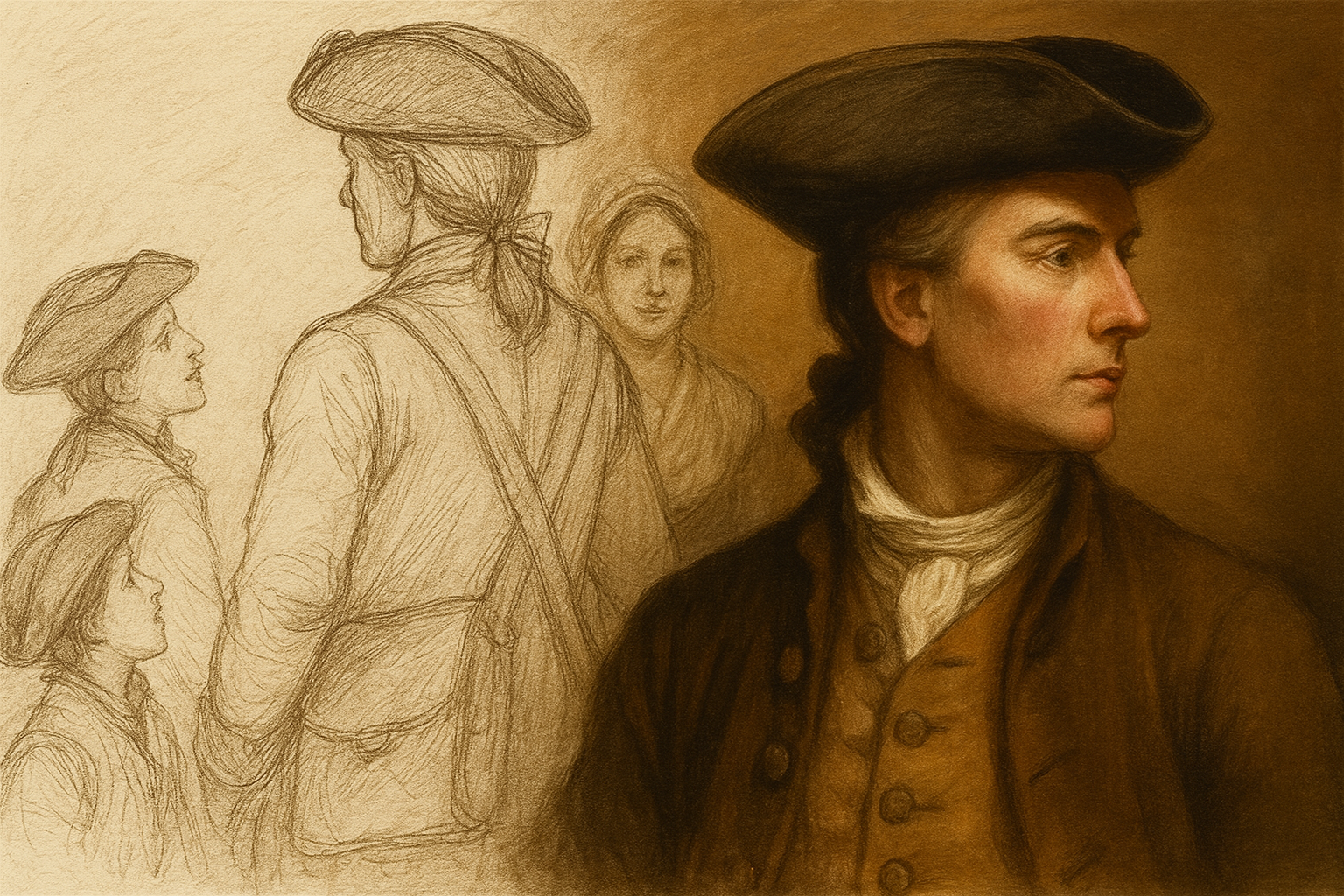
In the year 1775, the talk in Pennsylvania changed in tone. What had long been spoken of as grievance or protest began to carry the weight of resolve. News from Massachusetts—first of bloodshed, then of open resistance—traveled quickly along roads and through taverns, carried by riders, broadsheets, and the voices of neighbors returning from market. Men spoke no longer of whether trouble would come, but of how long it would be delayed.
It was in this climate that the 2nd Pennsylvania Regiment was raised for service in the Continental Army. Muster rolls filled with names familiar and unfamiliar alike, drawn from towns and countryside. Few among us had formal military experience. We came instead with strong hands, worn boots, and an understanding that whatever lay ahead would not soon release us back to our fields or trades.
Training was uneven and supplies uncertain. Arms varied in quality, and uniforms, where they existed at all, were often incomplete. Discipline had to be learned quickly, for we were no longer answering only to ourselves, but to officers appointed by Congress and to the wider cause of united resistance. Drill followed drill, and with each passing week the habits of civilian life gave way to the demands of soldiery.
By 1776, the nature of our service was clear. We were not assembled for a short demonstration or a show of force, but for a prolonged struggle. Orders carried us away from home, placing us where the army required—on roads, in camps, and in positions where the fate of the rebellion would be tested. I cannot claim knowledge of how the war would unfold, only that by then, retreat from our commitment was no longer possible.
When independence was declared that summer, the words reached us as soldiers already bound to the cause. Whatever doubts or fears men may have carried, they were carried in silence, for the work before us left little room for reflection. We stood as part of a growing army, uncertain in outcome but resolved in purpose, prepared to follow our regiment wherever it might be ordered to stand.
Disclaimer:
The articles on this site include original commentary as well as transcriptions and excerpts from historical newspapers, books, and other public domain sources. Every effort has been made to preserve the accuracy and context of these materials; however, their inclusion does not imply authorship, agreement, or endorsement by Patriot Echoes unless explicitly stated. Sources are cited where available. All materials are presented for educational, archival, and civic purposes. If you believe any item has been misattributed or requires correction, please contact the editorial team.