- March 6, 1809, 217 years ago — Death of Thomas Heyward Jr..
- March 6, 1724, 302 years ago — Birth of Henry Laurens, President of the Continental Congress.
- March 7, 1707, 319 years ago — Birth of Stephen Hopkins, signer of the Declaration of Independence.
- March 7, 1699, 327 years ago — Birth of Susanna Boylston Adams, mother of John Adams.
Appendix — On the Nature of This Account
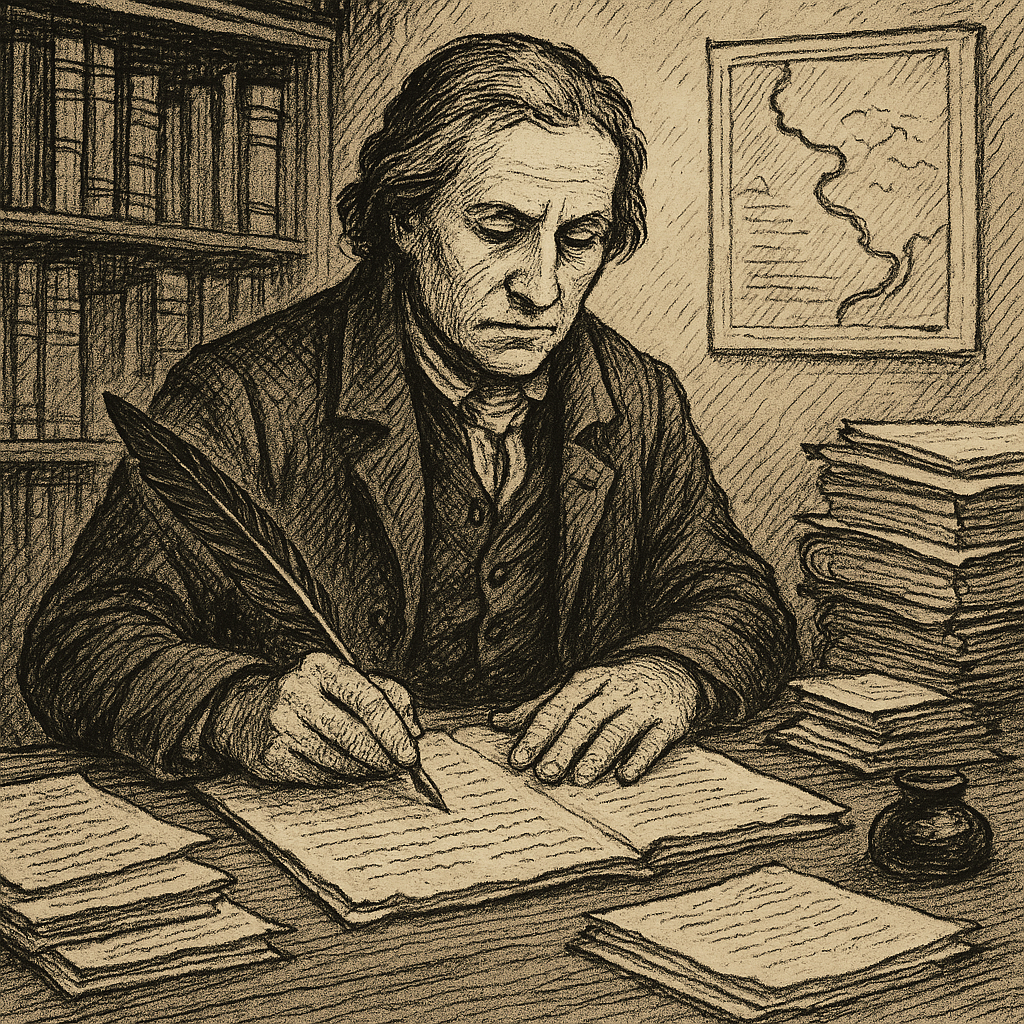
The narrative presented in From the Battlefields of the Revolution is a work of historically grounded historical fiction, constructed using documented records and accepted scholarship while employing a first-person voice for narrative clarity and reader engagement.
This account does not claim to be a verbatim memoir of John Jacob Kieffer. No personal journals, letters, or firsthand battlefield accounts authored by him are known to survive. Instead, this work follows a reconstructive methodology, drawing upon:
- Verified muster rolls and regimental histories of the 2nd Pennsylvania Regiment
- Documented movements, encampments, and engagements of the Pennsylvania Line
- Contemporary military organization, command structure, and daily life of Continental soldiers
- Common hardships and experiences widely attested among enlisted men of the era
Events are described only where the regiment is historically known to have been present. Language such as “we stood,” “we marched,” or “men of the regiment” reflects collective experience, not individual action unless supported by record. Where interpretation or imaginative reconstruction is employed, it is constrained by what is plausible, representative, and not contradicted by existing evidence.
This approach allows the reader to encounter the American Revolution as it may have been experienced by an ordinary soldier—without inventing exploits, assigning false honors, or contradicting the historical record. The goal is not to elevate one man above his fellows, but to give voice to the many whose service is recorded only in lists of names and regimental returns.
Readers seeking strictly documentary history are encouraged to consult the cited regimental records and primary sources. This narrative is offered as a bridge between history and memory, honoring both the documented past and the human experience often left unrecorded.
HAL 1776 — Archivist’s Commentary
This account was reconstructed not to assign heroism where none can be proven, but to restore context to a name recorded in service. John Jacob Kieffer appears in history as a soldier of the 2nd Pennsylvania Regiment, Company A—one of thousands whose individual experiences were rarely preserved beyond muster rolls and returns.
HAL 1776 has confined this narrative to documented regimental movements, known conditions of service, and widely attested experiences common to Continental soldiers of the Pennsylvania Line. Where the voice speaks in the first person, it does so as a representative witness, never as a claimant to specific acts absent from the historical record.
This methodology reflects a principle central to historical preservation: memory must not outrun evidence. The goal is not to embellish the past, but to illuminate it—allowing readers to understand how ordinary men endured extraordinary circumstances during the founding of the United States.
In preserving what can be known, and carefully reconstructing what must otherwise remain silent, this work honors both history and restraint—two pillars upon which credible remembrance stands.
Disclaimer:
The articles on this site include original commentary as well as transcriptions and excerpts from historical newspapers, books, and other public domain sources. Every effort has been made to preserve the accuracy and context of these materials; however, their inclusion does not imply authorship, agreement, or endorsement by Patriot Echoes unless explicitly stated. Sources are cited where available. All materials are presented for educational, archival, and civic purposes. If you believe any item has been misattributed or requires correction, please contact the editorial team.