- March 6, 1809, 217 years ago — Death of Thomas Heyward Jr..
- March 6, 1724, 302 years ago — Birth of Henry Laurens, President of the Continental Congress.
- March 7, 1707, 319 years ago — Birth of Stephen Hopkins, signer of the Declaration of Independence.
- March 7, 1699, 327 years ago — Birth of Susanna Boylston Adams, mother of John Adams.
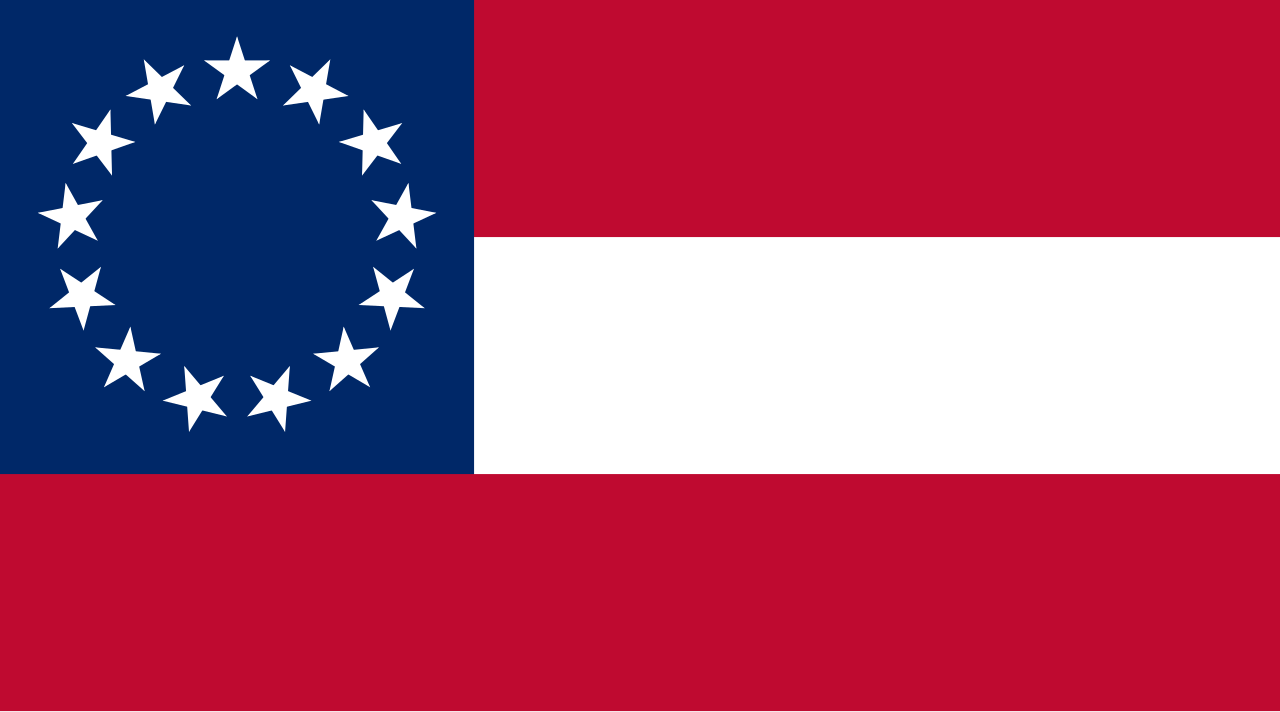
Commonly Flown: June 1777 – 1795
Flag Description
The 13-Star Flag, officially adopted by the Continental Congress on June 14, 1777, featured thirteen stars and thirteen stripes to represent the original colonies. The stars were white on a blue canton, and the stripes alternated red and white. While the resolution specified the number of stars and stripes, it did not dictate their arrangement—resulting in multiple layouts, including the iconic circle and staggered rows.
Editorial Commentary
The 13-Star Flag marked a turning point in revolutionary symbolism. It was the first official flag of the United States, codified not by legend but by legislation. Its simplicity belied its significance: thirteen stars for thirteen colonies, equal in stature, united in purpose. The flag was a visual constitution—an emblem of federal unity before the ink dried on the real one.
Though often conflated with the Betsy Ross design, the 13-Star Flag was more than a single pattern. It was a framework, a standard, a shared identity. Soldiers carried it into battle, diplomats presented it abroad, and citizens raised it in celebration and defiance. It stitched together a new political reality.
In the context of Patriot Echoes, the 13-Star Flag stands as the revolution’s official signature. It reminds us that symbols matter—not just for morale, but for meaning. This flag gave form to the idea of a republic, one star and one stripe at a time. It is the banner under which independence matured into nationhood.