- March 6, 1809, 217 years ago — Death of Thomas Heyward Jr..
- March 6, 1724, 302 years ago — Birth of Henry Laurens, President of the Continental Congress.
- March 7, 1707, 319 years ago — Birth of Stephen Hopkins, signer of the Declaration of Independence.
- March 7, 1699, 327 years ago — Birth of Susanna Boylston Adams, mother of John Adams.

Commonly Flown: August 1777 – 1783
Flag Description
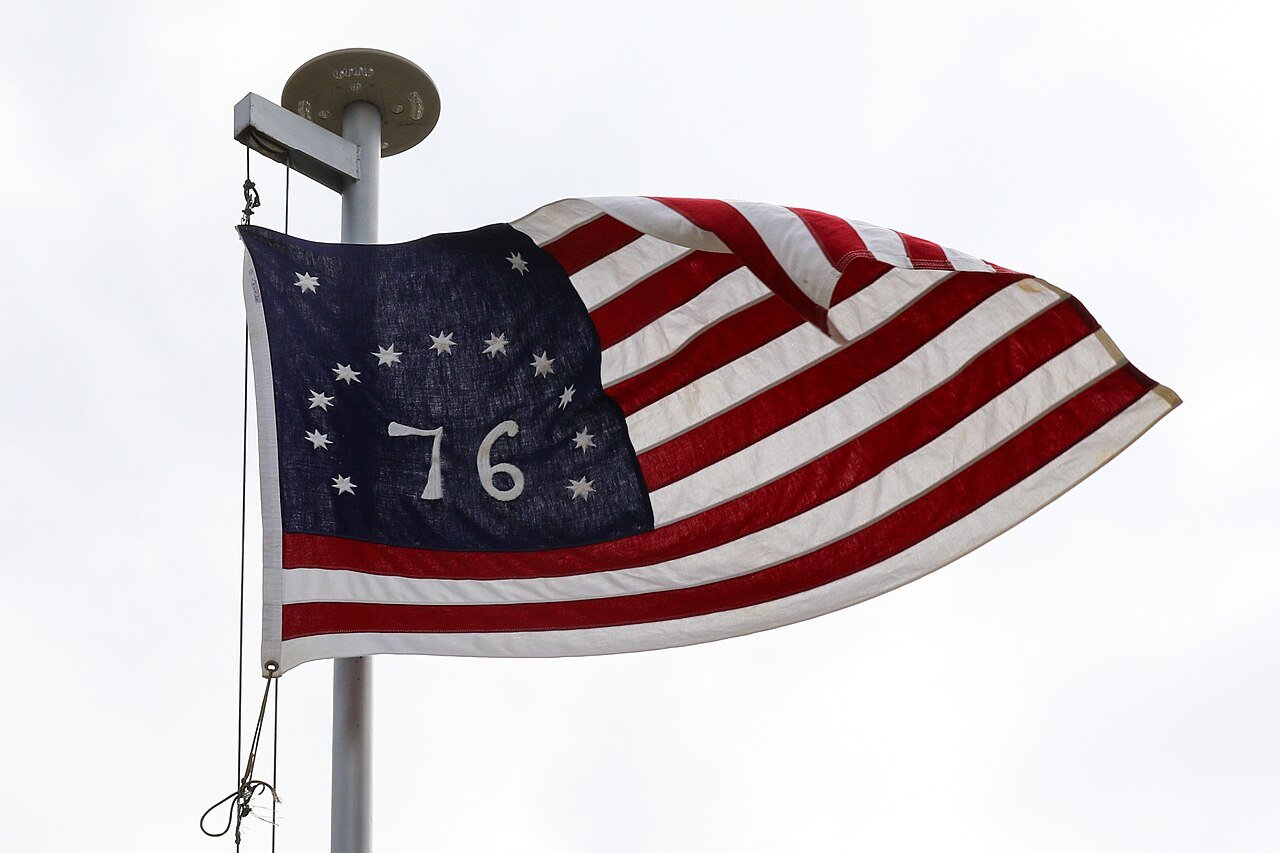
The Bennington Flag features thirteen alternating red and white stripes, a blue canton with thirteen seven-pointed stars, and a large “76” centered prominently in the canton. It is traditionally associated with the Battle of Bennington on August 16, 1777, where American forces secured a key victory against British and Hessian troops. The flag’s unusual star shape and bold numerals emphasize the spirit of 1776 and the fight for independence.
Editorial Commentary
The Bennington Flag is a banner of memory and momentum. Its “76” is not subtle—it is a declaration of origin, a reminder of the year the colonies broke from Britain. Whether or not it was actually carried at the Battle of Bennington, the flag has come to symbolize that pivotal moment when the tide began to turn in favor of the revolutionaries.
Its design is distinctive. The seven-pointed stars, the white stripe at the top and bottom, and the oversized numerals all set it apart from other revolutionary banners. It feels ceremonial, almost theatrical—an emblem meant to be remembered. And it was. The flag was preserved by the Fillmore family and later revived during the centennial celebrations of 1876, cementing its place in patriotic lore.
In the context of Patriot Echoes, the Bennington Flag stands as a symbol of revolutionary resolve and retrospective pride. It reminds us that the fight for independence was not just about battles—it was about belief. This flag captured the spirit of a people who knew what they were fighting for, and who wanted future generations to remember exactly when it began.