- March 6, 1809, 217 years ago — Death of Thomas Heyward Jr..
- March 6, 1724, 302 years ago — Birth of Henry Laurens, President of the Continental Congress.
- March 7, 1707, 319 years ago — Birth of Stephen Hopkins, signer of the Declaration of Independence.
- March 7, 1699, 327 years ago — Birth of Susanna Boylston Adams, mother of John Adams.
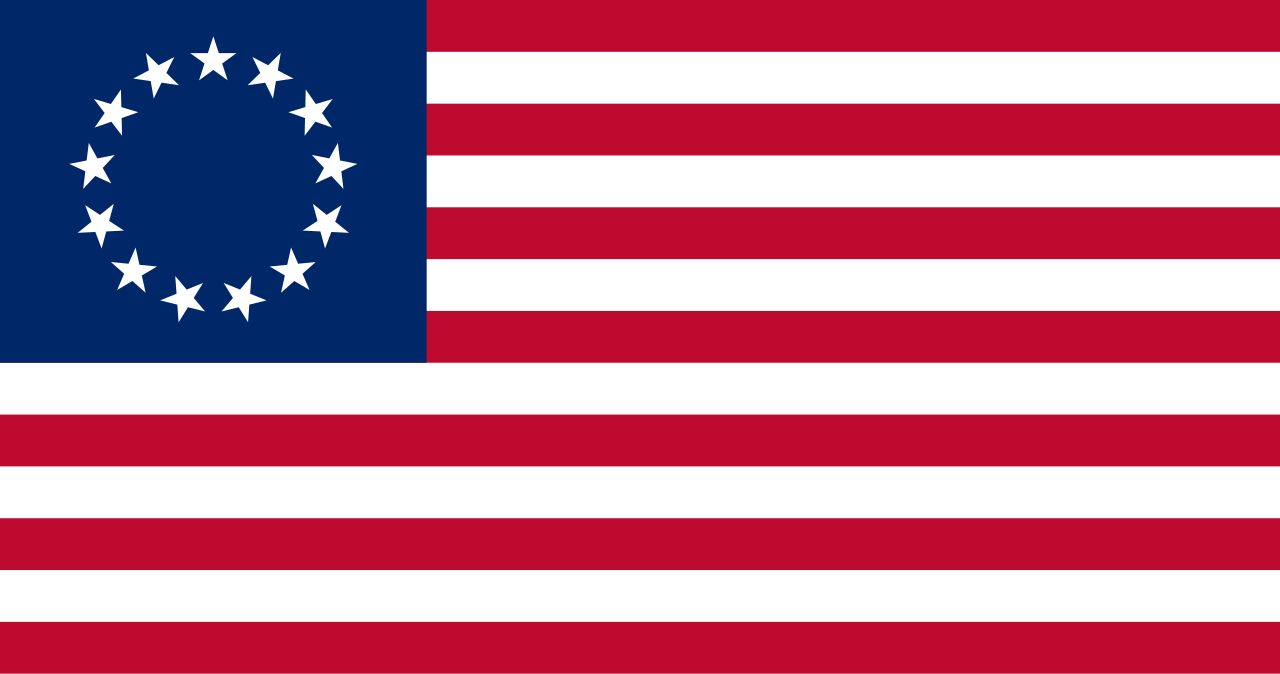
Commonly Flown: June 1776 – 1783
Flag Description
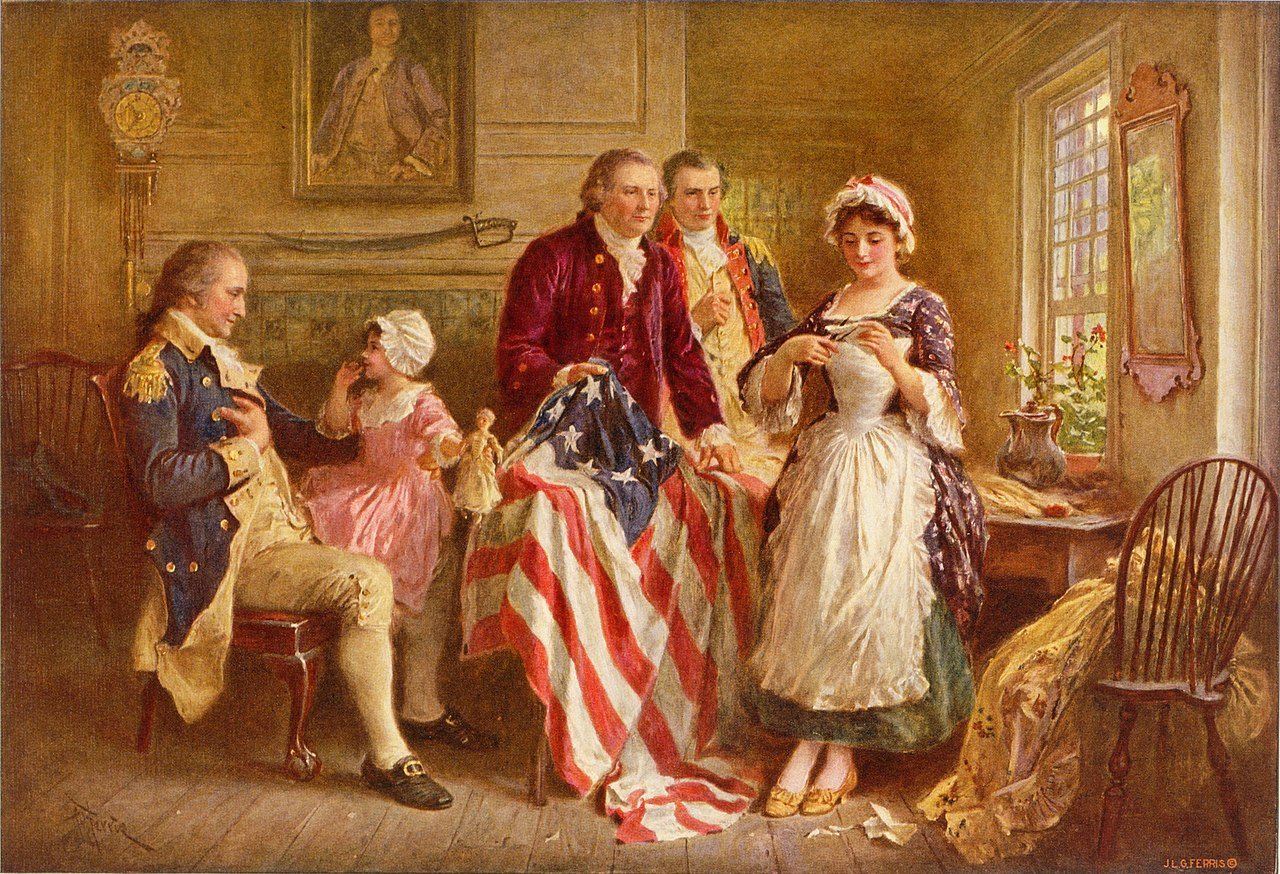
The Betsy Ross Flag features thirteen five-pointed stars arranged in a circle on a blue canton, with thirteen alternating red and white stripes. It is traditionally associated with Betsy Ross, a Philadelphia upholsterer who was said to have sewn the first version at the request of George Washington and others. Though the historical evidence is debated, the flag remains a powerful symbol of early American unity and identity.
Editorial Commentary
The Betsy Ross Flag is the revolution’s most enduring icon. Whether or not Betsy Ross herself stitched the first version, the design captures the moment when thirteen disparate colonies began to see themselves as a single nation. The circle of stars—equal in size and evenly spaced—spoke to the radical idea that no colony was above another. It was a visual constitution before the written one.
This flag was not born on a battlefield, but in a workshop. Its creation, whether apocryphal or factual, reflects the domestic side of revolution—the quiet labor behind the loud declarations. It flew over encampments, was carried into battle, and adorned public buildings. It became the face of a new republic still in its infancy.
In the context of Patriot Echoes, the Betsy Ross Flag stands as a symbol of aspiration. It reminds us that revolutions are not only fought—they are imagined. This flag gave shape to the dream of unity, equality, and independence. It is more than cloth and thread—it is the stitched silhouette of a nation coming into being.