- March 6, 1809, 217 years ago — Death of Thomas Heyward Jr..
- March 6, 1724, 302 years ago — Birth of Henry Laurens, President of the Continental Congress.
- March 7, 1707, 319 years ago — Birth of Stephen Hopkins, signer of the Declaration of Independence.
- March 7, 1699, 327 years ago — Birth of Susanna Boylston Adams, mother of John Adams.
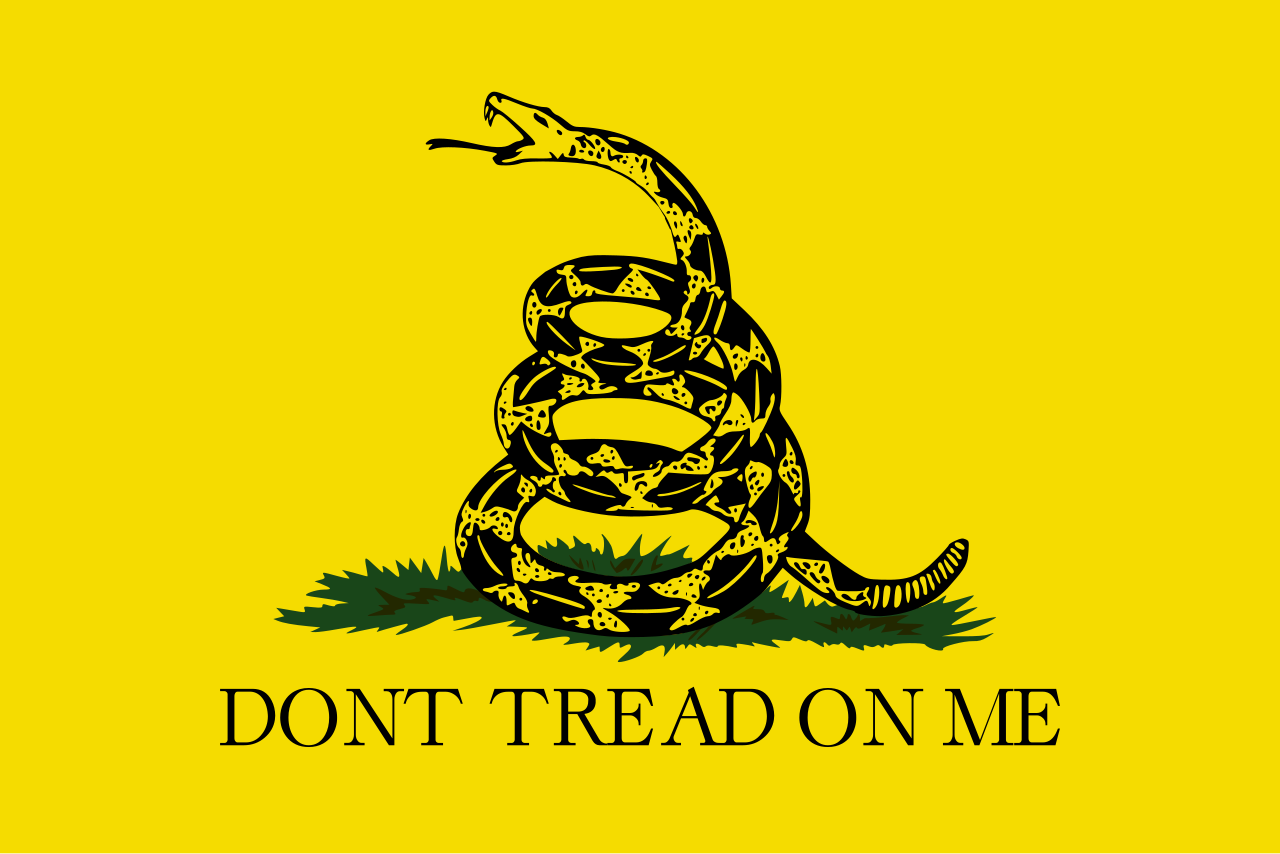
Commonly Flown: December 1775 – 1783
Flag Description
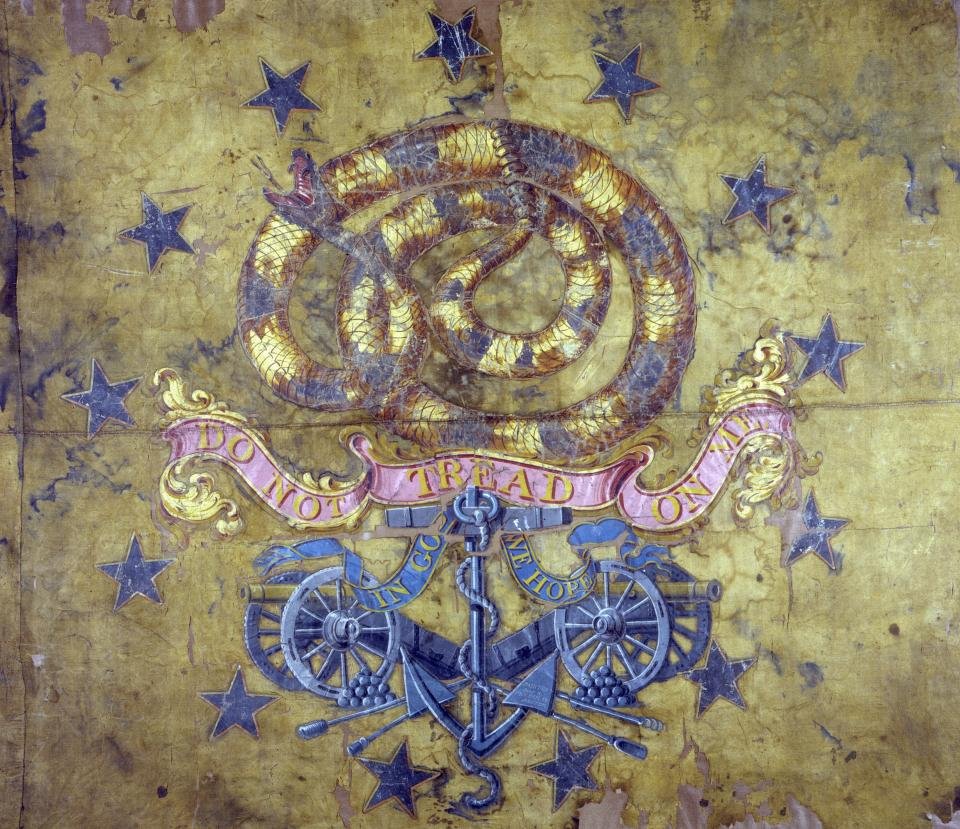
The Gadsden Flag features a bright yellow field with a coiled rattlesnake poised to strike, accompanied by the words “Don’t Tread on Me.” Designed by Christopher Gadsden and presented to the Continental Congress in late 1775, it was adopted by the Continental Marines as an early naval standard. The rattlesnake, a uniquely American symbol, conveyed vigilance, strength, and a warning against provocation.
Editorial Commentary
The Gadsden Flag is a declaration, not a negotiation. Its imagery is direct and its message unmistakable: liberty will be defended, and aggression will be met with force. In the volatile months following Lexington and Concord, this flag gave visual form to the colonies’ resolve. It was not a plea for rights—it was a warning to tyrants.
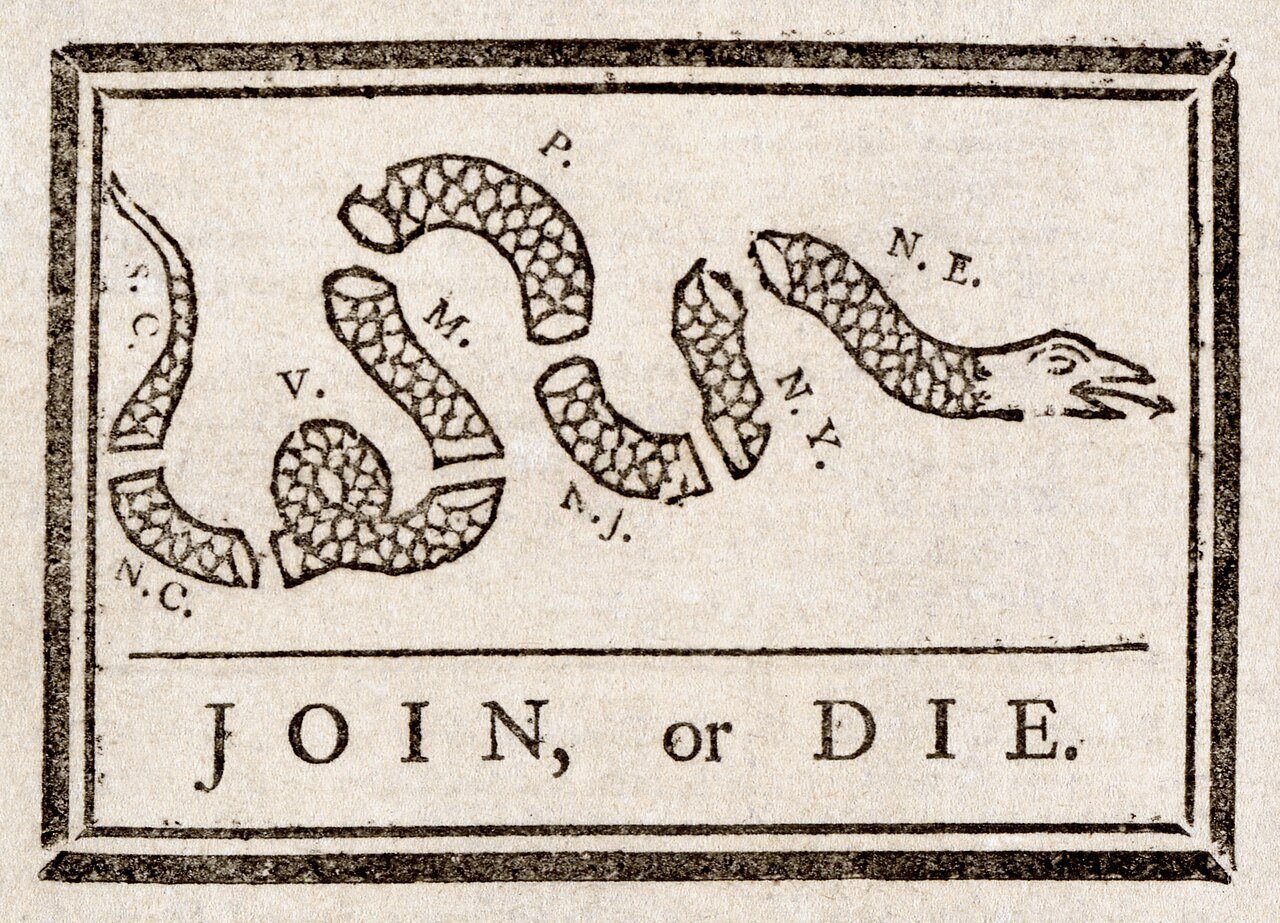
Christopher Gadsden’s design drew on a growing tradition of rattlesnake symbolism in colonial print culture, where the serpent represented unity and resistance. By placing it on a bold yellow field and pairing it with a stark motto, the flag became one of the most recognizable emblems of the revolution. It flew aboard naval vessels, in military camps, and in political gatherings, signaling that the fight for liberty had teeth.
In the context of Patriot Echoes, the Gadsden Flag stands as a visual manifesto. It reminds us that the revolution was not only philosophical—it was visceral. The colonies were not merely debating—they were preparing. This flag captured the mood of a people who had moved beyond protest and into the realm of armed defiance.