- March 6, 1809, 217 years ago — Death of Thomas Heyward Jr..
- March 6, 1724, 302 years ago — Birth of Henry Laurens, President of the Continental Congress.
- March 7, 1707, 319 years ago — Birth of Stephen Hopkins, signer of the Declaration of Independence.
- March 7, 1699, 327 years ago — Birth of Susanna Boylston Adams, mother of John Adams.
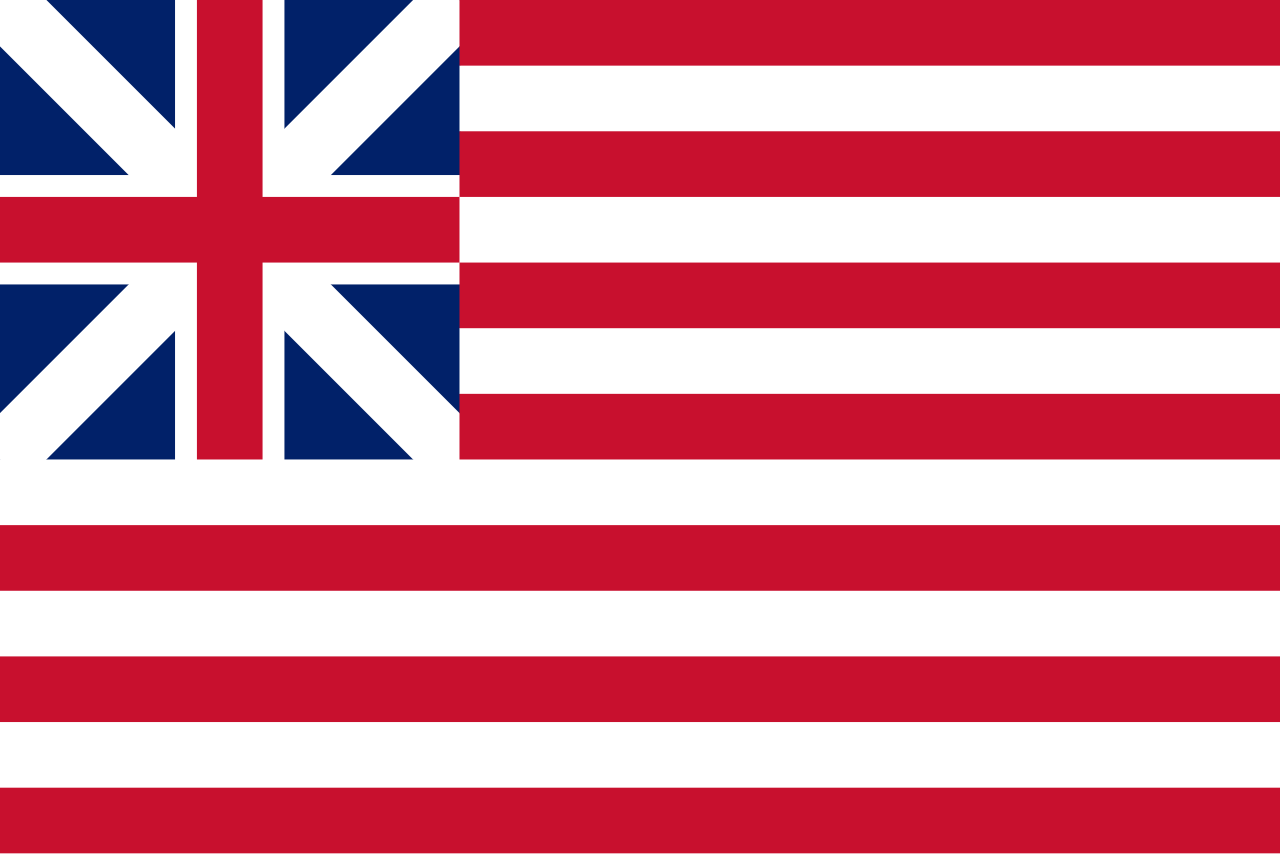
Commonly Flown: Late 1775 – Mid 1777
Flag Description
The Grand Union Flag, also known as the Continental Colors, featured thirteen alternating red and white stripes representing the united colonies, with the British Union Jack in the canton. First raised on December 3, 1775, by naval commander John Paul Jones aboard the USS Alfred, it was the first national flag of the united colonies and served as a transitional symbol during the early stages of the American Revolution.
Editorial Commentary
The Grand Union Flag was a banner of ambiguity—part rebellion, part reconciliation. Its thirteen stripes boldly declared unity among the colonies, while the Union Jack in the canton signaled lingering ties to the British Crown. In late 1775, the colonies were not yet calling for full independence; they were demanding rights within the empire. This flag captured that tension in cloth.
When George Washington raised the Grand Union Flag at his Cambridge headquarters on New Year’s Day 1776, it was both a rallying point and a diplomatic gesture. To some, it was a symbol of colonial solidarity. To others, it was a confusing emblem—was it a call to arms or a plea for compromise?
In the context of Patriot Echoes, the Grand Union Flag represents the revolution’s liminal moment. It reminds us that national identity is not born overnight. This flag stood at the crossroads of empire and independence, marking the shift from protest to purpose. It is the visual hinge between colonial subjecthood and American sovereignty.