- March 6, 1809, 217 years ago — Death of Thomas Heyward Jr..
- March 6, 1724, 302 years ago — Birth of Henry Laurens, President of the Continental Congress.
- March 7, 1707, 319 years ago — Birth of Stephen Hopkins, signer of the Declaration of Independence.
- March 7, 1699, 327 years ago — Birth of Susanna Boylston Adams, mother of John Adams.

Commonly Flown: May 1775 – 1777
Flag Description
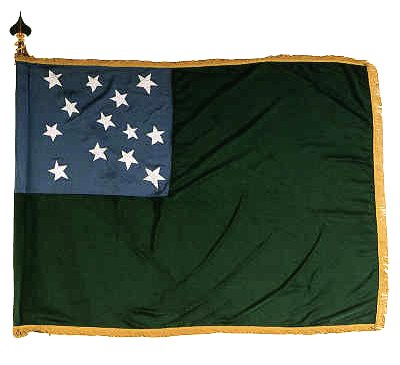
The Green Mountain Boys Flag features a green field with a blue canton bearing thirteen white stars. It was carried by the militia led by Ethan Allen during the capture of Fort Ticonderoga in May 1775. Though variations exist, the flag’s color and star arrangement reflect the independent spirit of the Vermont region and its early commitment to the revolutionary cause.
Editorial Commentary
The Green Mountain Boys Flag is a banner of frontier defiance. Raised by a militia outside the formal structure of the Continental Army, it symbolized the resolve of settlers in the New Hampshire Grants—what would later become Vermont. These men were land defenders, not just revolutionaries. Their flag reflected their autonomy, their unity, and their readiness to act.
When Ethan Allen and his troops seized Fort Ticonderoga, they did so with boldness and speed. The flag they carried was not standardized, but it was meaningful. It represented a group that had already been resisting British land claims and royal governors. Their fight for independence was both national and local.
In the context of Patriot Echoes, the Green Mountain Boys Flag reminds us that the revolution was not confined to cities or legislatures. It was fought in forests, on lakes, and across disputed borders. This flag stands for a people who didn’t wait for permission to defend their liberty. It is a symbol of initiative, resilience, and the power of regional identity in shaping national destiny.