- March 6, 1809, 217 years ago — Death of Thomas Heyward Jr..
- March 6, 1724, 302 years ago — Birth of Henry Laurens, President of the Continental Congress.
- March 7, 1707, 319 years ago — Birth of Stephen Hopkins, signer of the Declaration of Independence.
- March 7, 1699, 327 years ago — Birth of Susanna Boylston Adams, mother of John Adams.
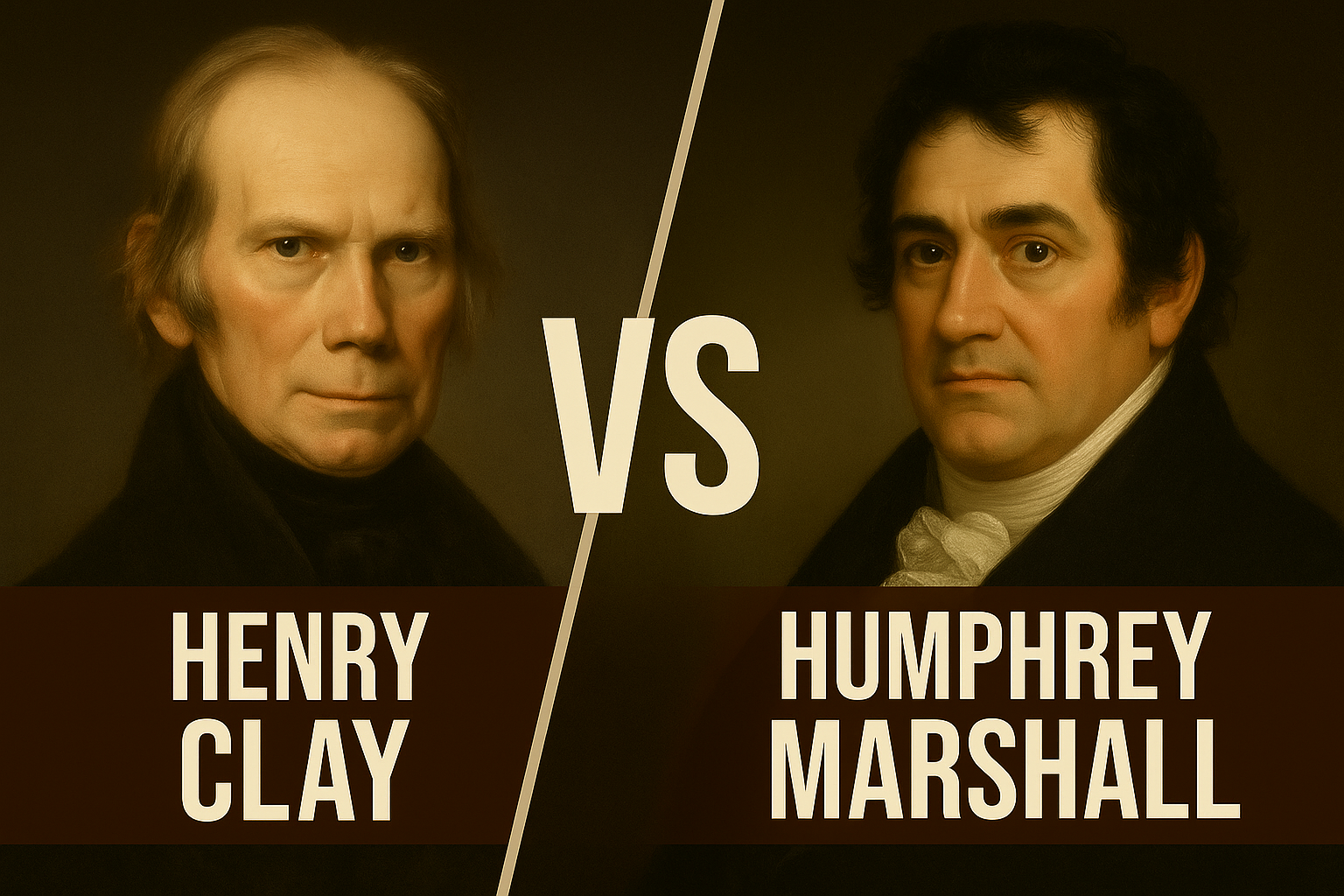
Duel: Henry Clay vs. Humphrey Marshall
Date: January 19, 1809
Location: Silver Creek, Indiana Territory (a common dueling ground for Kentuckians avoiding state laws)
Weapons: Pistols
Cause of the Duel
The dispute erupted in the Kentucky legislature.
Humphrey Marshall, a Federalist and sharp critic of the Madison–Jefferson wing, clashed repeatedly with Henry Clay, a rising Democratic-Republican leader.
The immediate trigger was Clay’s sponsorship of a bill requiring Kentucky legislators to wear home-manufactured clothing as a patriotic gesture supporting American industry during the embargo period.
Marshall mocked the measure as political theater and pointedly refused to comply.
Clay interpreted Marshall’s criticism as an insult to his honor and his integrity as a statesman.
He confronted Marshall, harsh words followed, and the argument escalated until Clay issued a formal challenge.
Quotes from the Combatants
Surviving remarks are paraphrased through legislative accounts and personal letters, but two notable lines are recorded in contemporary summaries:
Marshall’s criticism of Clay’s clothing bill
He called the measure “a paltry attempt at patriotism” and ridiculed Clay’s motives.
Clay’s response in the legislature (paraphrased)
He accused Marshall of making “insolent reflections upon my character” and declared that he would not permit such language to pass unanswered.
Marshall’s acceptance
Marshall told Clay’s second that he would meet him and “maintain every word I have spoken.”
Outcome of the Duel
The duel consisted of three exchanges of fire, extremely rare in American dueling:
- First fire: Marshall wounded Clay in the thigh.
- Second fire: Both missed.
- Third fire: Clay grazed Marshall, striking his coat and slightly wounding him.
After the third exchange, the seconds agreed the matter of honor was satisfied, and the duel ended.
Both men survived and continued their political careers.
The duel became part of Henry Clay’s legend — reinforcing his reputation for fiery temperament and absolute sensitivity to personal honor.
Witnesses / Seconds
For Henry Clay:
- John Rowan (second)
- Dr. Frederick Ridgely (attending)
For Humphrey Marshall:
- Major Thomas Bodley (second)
- Dr. Richard Ridgely (attending; brother of Frederick)
The seconds supervised the ground rules and halted the duel after the third exchange.
In the Press
Kentucky Gazette Tue, Jan 24, 1809 ·Page 3
A duel was fought on Friday last, near Louisville, by Henry Clay and Humphrey Marshall, esqrs. The first fire mr. Clay's ball grazed the skin of his adversary's abdomen. On the second fire mr. Clay's pistol snapped. Mr. Marshall missed both shots. On the third fire, mr. Marshall's ball took effect in mr. Clay's thigh. The wound is not considered dangerous. Mr. Marshall fired first in every instance. The duel proceeded from some personal observations used by those gentlemen in debate on mr. Clay's resolution to introduce domestic manufactures.
Disclaimer:
The articles on this site include original commentary as well as transcriptions and excerpts from historical newspapers, books, and other public domain sources. Every effort has been made to preserve the accuracy and context of these materials; however, their inclusion does not imply authorship, agreement, or endorsement by Patriot Echoes unless explicitly stated. Sources are cited where available. All materials are presented for educational, archival, and civic purposes. If you believe any item has been misattributed or requires correction, please contact the editorial team.