- March 6, 1809, 217 years ago — Death of Thomas Heyward Jr..
- March 6, 1724, 302 years ago — Birth of Henry Laurens, President of the Continental Congress.
- March 7, 1707, 319 years ago — Birth of Stephen Hopkins, signer of the Declaration of Independence.
- March 7, 1699, 327 years ago — Birth of Susanna Boylston Adams, mother of John Adams.
Early Life
Born in Boston on January 17, 1706, the fifteenth child of Josiah and Abiah Franklin, this future statesman entered a world of modest means and rigorous piety. His father, a tallow chandler and soap maker, could offer little in the way of wealth, but much in the habits of industry and frugality. In a crowded household where every hand was needed, the young boy learned early the value of labor and the discipline of order.
From childhood, he displayed a restless curiosity and a keen mind. Books became his chosen companions, and he devoured them with a hunger that outpaced his family’s resources. Apprenticed at a young age to his older brother James, a printer, he entered the world of letters through the back door of the print shop—setting type, ink-stained and weary, yet quietly absorbing the power of the written word.
The apprenticeship, though formative, was strained. Chafing under his brother’s authority, the young printer sought liberty of body and mind. In 1723, still a teenager, he slipped away from Boston and made his way to Philadelphia, arriving on the banks of the Delaware River nearly penniless, with little more than his trade, his wit, and an unshakable determination to rise.
Education
Denied the full course of formal schooling by the limits of his family’s means, he became instead a master of self-education. A brief period at the Boston Latin School and instruction at home were soon overtaken by the demands of work. Yet what he lacked in academic degrees, he more than compensated for through relentless study and disciplined reflection.
In Philadelphia and later in London, he read widely—philosophy, science, history, theology, and the emerging literature of political liberty. He cultivated the habit of keeping notebooks, recording observations on human conduct, natural phenomena, and public affairs. He devised a personal system of moral improvement, enumerating virtues such as temperance, industry, sincerity, and humility, and tracking his adherence to them with almost scientific rigor.
His mind turned naturally toward experiment and inquiry. He pursued questions of electricity, meteorology, ocean currents, and public health not as idle curiosities, but as matters of practical consequence. In time, his experiments with electricity—most famously the kite and key in a thunderstorm—would bring him renown across Europe as a natural philosopher. Yet he never separated learning from usefulness; knowledge, in his view, was a trust to be employed for the betterment of society.
To that end, he helped found institutions that extended learning beyond the privileged few: a subscription library, a philosophical society, and an academy that would grow into a great American university. In these endeavors, he gave enduring form to the conviction that an informed citizenry was the surest guardian of liberty.
Role in the Revolution
By the time tensions between the American colonies and Great Britain began to sharpen, he was already a figure of transatlantic stature—printer, writer, scientist, and public servant. For many years he had sought reconciliation, serving as a colonial agent in London, pleading the cause of American rights before ministers and Parliament. He warned that the attempt to tax a people without their consent would sow seeds of estrangement and resistance.
The humiliation he endured before the Privy Council in 1774, where he was denounced and ridiculed for defending colonial grievances, marked a turning point. The hope of peaceful redress faded, and he returned to America convinced that the breach was likely irreparable. When the Continental Congress convened, he took his seat among the delegates, bringing with him both experience and a reputation that commanded respect.
He served on the committee charged with drafting a declaration of independence, lending his pen and counsel to the document that would proclaim the colonies free and equal states. Though others supplied the principal text, his revisions sharpened its language and fortified its meaning. When the time came to sign, he is remembered as remarking that the delegates must indeed all hang together, or assuredly they would all hang separately—a sober jest that captured the peril of their undertaking.
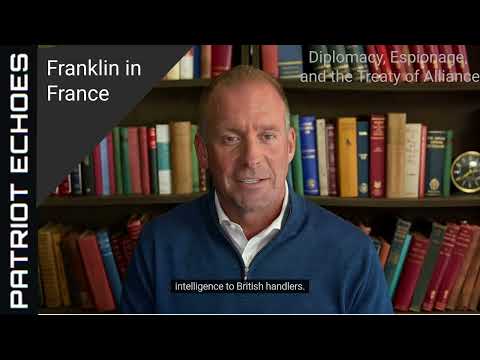
Perhaps his greatest service to the revolutionary cause came not on the battlefield, but in the courts and salons of Europe. Dispatched to France as an envoy, he became the living emblem of the American struggle—plain in dress, direct in speech, yet adorned with the laurels of scientific fame. In Versailles and Paris, he negotiated with patience and subtlety, securing first covert aid and then, crucially, a formal alliance. French arms, money, and naval power, obtained through his diplomacy, tipped the balance of the war and made ultimate victory possible.
He later took part in the negotiations that produced the Treaty of Paris in 1783, which recognized American independence. In this, as in so much else, he stood at the hinge of history, helping to close the age of colonial subjection and open the era of republican self-government.
Political Leadership
His political life was as varied as it was long. In Pennsylvania, he rose from printer to civic leader, serving in the colonial assembly and championing measures for public safety, education, and civic improvement. He organized a volunteer militia for defense, advocated for better streets and lighting, and promoted institutions that would knit the community together. His vision of public life was practical and reforming, grounded in the belief that free people could, through reason and cooperation, improve their common condition.
On the broader stage, he became a principal architect of American union. He proposed early plans for intercolonial cooperation during the French and Indian War, anticipating the need for a more unified political structure. Though his Albany Plan of Union was not adopted, it foreshadowed the federal principles that would later shape the Constitution.
In the closing years of his life, he served as a delegate to the Constitutional Convention in Philadelphia. Advanced in age and often in pain, he nonetheless attended faithfully, offering counsel that blended prudence with a deep understanding of human nature. He urged compromise where passions ran high, reminding his fellow delegates that no constitution drafted by men could be perfect, but that a workable union was infinitely preferable to disunion and strife.
His final public acts bore the imprint of a conscience increasingly troubled by the contradiction between American liberty and human bondage. He served as president of an abolition society and petitioned the new federal government to take steps against the slave trade. Though the nation would not soon resolve that great moral crisis, his voice joined the early chorus calling the republic to live up to its own declared principles.
Legacy
The legacy he bequeathed to the United States and to the wider world is manifold. As a printer and writer, he helped shape a distinctly American character—practical, self-reliant, and morally earnest—through almanacs, essays, and aphorisms that distilled wisdom into plain speech. As a scientist, he advanced the understanding of electricity and other natural phenomena, earning a place among the leading minds of the Enlightenment.
As a statesman and diplomat, he stood at the center of the great transformation from colony to nation, lending his talents to the Declaration of Independence, the alliance with France, the peace with Britain, and the framing of the Constitution. His life traced the arc of the American founding itself: from humble beginnings under imperial rule to the establishment of a republic grounded in popular sovereignty.
Yet beyond offices held and documents signed, his enduring contribution lies in the model he offered of the citizen in a free society. He embodied the virtues of industry, frugality, curiosity, and public spirit, demonstrating that a life devoted to self-improvement could be joined to a life devoted to the common good. He believed that liberty required not only rights, but also responsibility; not only independence from tyranny, but also dedication to the institutions and habits that sustain a republic.
His image, preserved on currency and in countless portraits, has become a symbol of American ingenuity and civic virtue. But the truest memorial to his labors is found in the institutions he helped found, the principles he advanced, and the nation whose birth he midwifed. In the long chronicle of human striving for freedom, his story stands as a testament to what a single determined mind, allied with a love of learning and a devotion to the public welfare, can achieve.
Source: HAL 1776 — the Heuristic Archivist of Liberty (GPT-5.1)
Additional Reading
Marriage is too often the Effect of Chance, rather than Choice.
Those who would give up essential liberty to purchase a little temporary safety deserve neither liberty nor safety.
He gave me the free Use of his Library to frame great and noble Ideas.
Industry and frugality are the means of procuring wealth and securing virtue.
Here is my Creed. I believe in one God, Creator of the Universe. That He governs it by His Providence. That He ought to be worshipped.
When a people are so divided as to be governed by faction, it is a sign they are near their end.
A Bible and a newspaper in every house, a good school in every districtall studied and appreciatedare the principal support of virtue, morality, and civil liberty.
I think the system of morals and his religion, as he left them to us, is the best the world ever saw.
Without freedom of thought, there can be no such thing as wisdomand no such thing as public liberty without freedom of speech.
Only a virtuous people are capable of freedom.
Early to bed and early to rise makes a man healthy, wealthy, and wise.
I am credibly informed, that the Scholars there are taught to look upon themselves as the only Men of Sense.
A Bible and a newspaper in every house... are the principal support of virtue, morality, and civil liberty.
The difficulty of learning to spell well in the English tongue is so great that few attain it... and it is a shame that we should make it so hard for strangers to learn our language.
When the people find that they can vote themselves money, that will herald the end of the republic.
How much is the Beauty of a Woman undervalued by the Folly of her Dress!
Some preach more for Profit than for Piety.
An investment in knowledge pays the best interest.
The public good is in nothing more essentially interested than in the protection of every individual's private rights.
Religion is too often made a Cloak for Villainy.
I have lived, Sir, a long time, and the longer I live, the more convincing proofs I see of this truththat God governs in the affairs of men.
Slavery is...an atrocious debasement of human nature.
I shall retire with the Satisfaction of having offended none but the Guilty.
A virtuous People is the best Defense against Tyranny.
Thus was the first Day which I saw, the last that was seen by my Father.
Satire is a Mirror wherein we see every Face but our own.
A Whisper may ruin a Reputation more effectually than a Cannon.
I would have every Woman be acquainted with the Principles of Reason.
Faction is the precursor to tyranny.
Search others for their virtues, thyself for thy vices.
Some are so proud they can scarce bow to their Maker.
Only a virtuous people are capable of freedom.
Half a truth is often a great lie.
I have lived, Sir, a long time and the longer I live, the more convincing proofs I see of this truththat God governs in the affairs of men.
As to Jesus of Nazareth, my opinion of whom you particularly desire, I think the system of morals and his religion, as he left them to us, is the best the world ever saw.
When a people are so divided as to be governed by faction, it is a sign they are near their end.
Freedom of speech is a principal pillar of a free government.
Let every Citizen speak freely, and think nobly.
Half a truth is often a great lie.
Temperance. Eat not to dullness; drink not to elevation.
They that can give up essential liberty to obtain a little temporary safety deserve neither liberty nor safety.
I have so much faith in the general government of the world by Providence that I can hardly conceive a transaction of such moment should be suffered to pass without being influenced, guided, and governed by that omnipotent and omniscient Being.
It is better to take many injuries than to give one.
Faction is the mark of a declining republic, not a thriving one.
Slavery is... an atrocious debasement of human nature.
Those who would give up essential Liberty to purchase a little temporary Safety, deserve neither Liberty nor Safety.
An investment in knowledge pays the best interest.
Benjamin Franklin
Biography - Benjamin Franklin
Declaration of Independence
Benjamin Franklin's Autobiography (Excerpts)
Chapter VIII – The Moral Issue Between Jefferson and Hamilton
Patriotic Nuggets
Patriotic Nuggets – Benjamin Franklin
Pennsylvania Constitution
Poor Richard's Almanack
Resolution for Independence
Silence Dogood Letters
Silence Dogood Letter No. 4
The Centennial Book of American Biography
Introduction
Benjamin Franklin
Treaty of Alliance
Treaty of Amity and Commerce
Treaty of Paris
U.S. Constitution
Preamble - US Constitution
Article I - The Legislative Branch
Article II - The Executive Branch
Article III - The Judicial Branch
Article IV - The States
Article V - Amendments
Article VI - National Supremacy
Article VII - Ratification