- March 6, 1809, 217 years ago — Death of Thomas Heyward Jr..
- March 6, 1724, 302 years ago — Birth of Henry Laurens, President of the Continental Congress.
- March 7, 1707, 319 years ago — Birth of Stephen Hopkins, signer of the Declaration of Independence.
- March 7, 1699, 327 years ago — Birth of Susanna Boylston Adams, mother of John Adams.
The Adams Correspondence (John & Abigail)
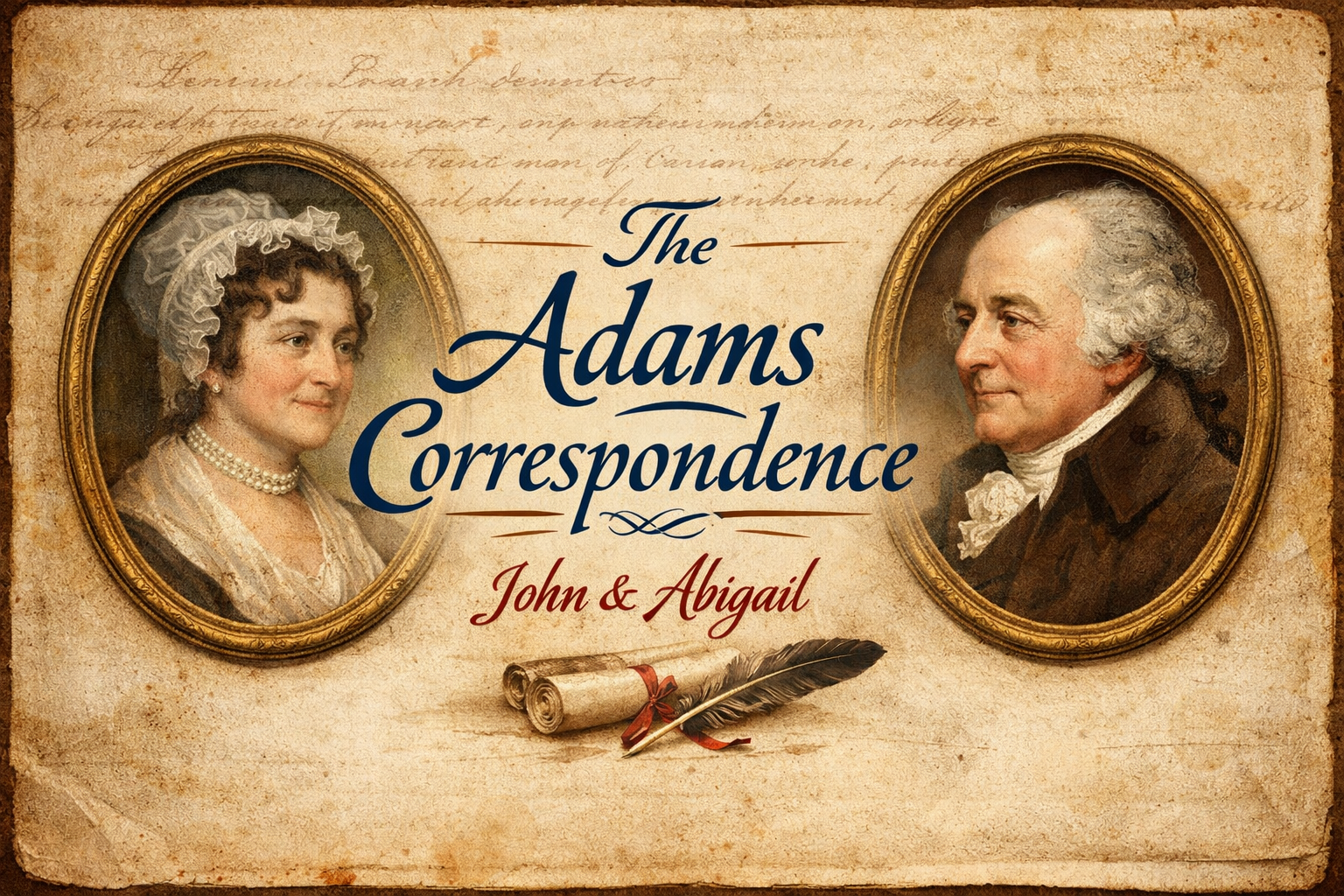
The correspondence between John and Abigail Adams is one of the most revealing private records of the American founding era. Written across long separations—first during the Continental Congress, then through war, diplomacy, and public office—their letters preserve a day-by-day account of the Revolution as it was lived: uncertain, costly, intimate, and relentlessly human.
This Patriot Echoes collection is organized as a conversation timeline. Each letter appears in chronological order, allowing readers to move naturally from one voice to the other—letter, reply, letter, reply—following the thread of a marriage that carried political ideas, family burdens, and the everyday realities of a nation being born.
Where available, letters are presented as clean transcriptions with minimal editorial interference. Any additional notes are clearly labeled, and HAL 1776 commentary (when present) is separated from the primary source text.
Primary Sources: Founders Online (National Archives) and the Adams Papers (Massachusetts Historical Society).
Patriot Echoes Archive: The Adams Correspondence
Table of Contents
I. Gathering Storm — Before the Revolution (1774–early 1775)
-
July 7, 1774 — Abigail Adams → John Adams
Domestic affairs, separation, and uncertainty -
July 10, 1774 — John Adams → Abigail Adams
First impressions of the Continental Congress -
August 14, 1774 — Abigail Adams → John Adams
Farm management and political awareness -
August 28, 1774 — John Adams → Abigail Adams
Debates, resolve, and the path ahead -
March 31, 1775 — Abigail Adams → John Adams
Rumors of war and household burdens -
April 14, 1775 — John Adams → Abigail Adams
Imperial tension and personal strain
II. Revolution and Independence (1776–1777)
-
March 31, 1776 — Abigail Adams → John Adams
“Remember the Ladies” -
April 14, 1776 — John Adams → Abigail Adams
Power, law, and political humor -
June 18, 1776 — Abigail Adams → John Adams
Inoculation, sacrifice, and family risk -
July 3, 1776 — John Adams → Abigail Adams
Independence imminent -
July 5, 1776 — John Adams → Abigail Adams
Reflections on independence and posterity -
February 17, 1777 — Abigail Adams → John Adams
Inflation, shortages, and civilian endurance -
May 12, 1777 — John Adams → Abigail Adams
Fatigue and diplomatic frustration
III. War Abroad and the Long Separation (1778–1780)
-
February 27, 1778 — John Adams → Abigail Adams
Isolation in France -
March 17, 1778 — Abigail Adams → John Adams
Encouragement from home -
June 29, 1780 — Abigail Adams → John Adams
Education, virtue, and sacrifice -
July 11, 1780 — John Adams → Abigail Adams
Republican character and duty
IV. Peace and Transition (1782–1784)
-
November 5, 1782 — John Adams → Abigail Adams
Peace negotiations -
September 16, 1783 — Abigail Adams → John Adams
War’s end and home life -
August 17, 1784 — Abigail Adams → John Adams
Reunion in Europe
V. The Republic Tested — Governance and Legacy (1786–1800)
-
June 15, 1786 — John Adams → Abigail Adams
Monarchy, republics, and governance -
March 21, 1797 — Abigail Adams → John Adams
The burdens of the presidency -
November 2, 1800 — Abigail Adams → John Adams
Reflections on legacy and public life
Methodology
This collection presents the correspondence of John and Abigail Adams as a chronological conversation, rather than as isolated documents. Letters are arranged by date and alternating authorship to preserve the natural rhythm of exchange—letter and reply—allowing readers to follow both private reflection and public decision as they unfolded in real time.
Each letter has been transcribed from authoritative primary sources, primarily Founders Online and the Adams Papers of the Massachusetts Historical Society. Original spelling, capitalization, and punctuation have been lightly standardized where necessary for modern web readability, while preserving the original meaning, tone, and intent of the authors. No substantive alterations to content have been made.
Introductory notes and concluding commentary are provided by HAL 1776 and are clearly distinguished from the primary texts. These annotations are intended to supply historical context, explain sequencing within the correspondence, and highlight thematic continuity across the series. They do not replace or reinterpret the letters themselves.
Where editorial summaries or subject descriptions appear in the Table of Contents, they are included solely as navigational aids. They are not original titles and should not be understood as part of the historical documents.
This archive is presented in the spirit of public history: faithful to original sources, transparent in editorial practice, and structured to make one of the most significant personal records of the American founding accessible to modern readers.